Showing posts with label #childrenscurriculum. Show all posts

10 Key Elements of Successful Teaching

It can be a challenge trying to teach today's kids. 

Childhood has changed. 

Today's kids have an attention span that can be measured in the single digits.

Today's kids have access to unlimited knowledge at the click of a mouse.

Today's kids are being wired to learn on their own.  They often feel like they can manage their own learning pace and don't need a teacher to guide them.

In spite of this...kids still need teachers to help them find, navigate, and apply knowledge. 

To be a successful teacher for today's kids requires certain skill sets.  The good news...these skills can be learned and used immediately. 

Let's look at 10 key elements of successful teaching for today's kids.  

1. Less lecture...more conversation. 

The more you lecture, the less kids learn. Instead of lecturing the kids for 20 minutes, talk to them for 2-3 minutes and then give them time to discuss what you just shared. Used open-ended, guided questions that will get kids talking. 

2. Less facts...more stories.

Did you know that the Bible says that Jesus used stories (parables) every time He taught.  He never taught without without using stories. There is something about stories that resonates with kids (and adults). Bring stories to your lessons and you will capture and hold kids' attention.

3. Less explanation...more object lessons.

Bring object lessons into your teaching. It works.  I did an object lesson last weekend when I was teaching kids.  We were talking about worshiping God through singing and how He fills us up with His love when we sing to Him.   

I took an empty coke bottle and filled it with vinegar.  I then poured some baking soda into an empty balloon.  When I placed the balloon over the bottle, the baking soda and vinegar combination blew up the balloon.  The kids loved it and it got the point across that I was communicating to them. 

4. Less monotone...more voice variance.

Remember Charlie Brown's teacher on the phone?  A bland, monotone voice.  Don't be that teacher. Learn to vary your voice when you are teaching. Whisper sometimes. Shout sometimes.  Bring excitement into your voice. 

5.  Less information...more application.

Go back to how Jesus taught.  His teaching was 85% application and 15% information.  Yes...kids need to learn the facts found in the Bible. But they also need to learn how to apply those truths and live them out. This is where application comes in. Make sure you give kids a few ways they can live out the lesson that week.

6.  Less reading by the teacher....more reading by the students.

Let kids read the verses in the lesson.  Yes, they will probably need your help with some of the words, but that's okay.  

This generation knows very little about how to find verses in the Bible much less read them.  Teach kids how to find verses in their Bible and then have them read the verses. 

7. Less "what"...more "why."

We must teach kids why we believe what we believe.  Yes...they need to learn the facts of the Bible. But they also must know why we believe the Bible is God's Word.  We can fill their heads with the "whats" but if they don't know the "why," they may walk away when they get older.

8. Less sitting still...more movement.

Kids were made to move.  Don't expect them to sit still for an hour.  Use active learning.  Get them up out of their seats and let them move!

9. Less quiet time...more games

Yes. There should be some quiet times in your lesson. I always have kids get still and quiet for prayer time.  For up to a minute, they sit in silence and listen to the Holy Spirit.  

But you can't expect kids to sit still for your entire class time.  

Play games.  

Active games.  

Kids love games. 

10. Less numbers...more relationships.

Make sure your lesson includes times for relationship building.  

Icebreakers.

Discussion times where they share about their family, school, favorites, etc.  

You've heard this quote. 

"People don't care how much you know until they know how much you care."

It is so true. When you make time to build relationships with the kids in your class, it opens the door of their heart to receive what you have to share with them.

Incorporate these 10 elements and you will immediately see improvement in your classroom experience. 

p.s. Have you checked out my Connect12 curriculum?  It incorporates all of these elements. Check it out at this link. 

12 Key Topics We Should Be Teaching Kids

We only have a short window of time to teach children about God and His Word.  

From first to fifth grade there are only 260 weekends and with the attendance patterns of your average family, you are only left with 100 - 130 opportunities to help kids get a solid faith foundation.  

What are you going to focus on during those weeks?  

What will your teaching strategy be? 

What key passages of Scripture will you have kids memorize?

I have spent hundreds of hours talking about and brainstorming what we should teach children in their elementary years. With the help of other leaders, we were able to narrow it down to 12 key topics.  Here is what I recommend we teach children in their elementary years. 

Salvation

Identity in Christ

Worship

Spiritual Growth

Obedience to God

The Bible / Apologetics

Purpose

Relationships

Stewardship

Wisdom

Sharing Your Faith

Spiritual Leadership 

I have curriculum series for each of these.  Below is an overview. Each series is 4-5 weeks.  You can get more information about ordering these at these link. They are available monthly or yearly. 

Try out one of these series on a weekend or mid-week program.  There are highly interactive and capture kids' attention.  

More importantly, they teach kids key Biblical truths that they can use for the rest of their life.

Why It's Crucial to Use Repetition When You Are Teaching Children

Have you noticed that kids love to watch the same show or episode over and over again? Have you noticed they love to hear the same story read again and again? 

There are reasons for this and we need to focus on this.

Repetition obviously has great benefits for children’s learning and well being. 

We know that repetition is a key part of learning.  

The Bible confirms this. Look what it says in Deuteronomy 6:7. 

"Repeat them again and again to your children. Talk about them when you are at home and when you are on the road, when you are going to bed and when you are getting up." 

Children are constantly searching for the occurrence of regularities and patterns in their lives. It makes sense that children’s brains search for repetition because it helps them learn.

Repetition helps kids feel competent and in control. We know that kids are constantly being challenged to grow and learn.  They are always being stretched.  When they are able to master challenges through repetition, it helps them feel competent. They feel a sense of control which is very important for children.

"When children return to watch the same show, what they are doing, whether they know it or not, is driven by a desire to detect and consolidate the patterns in what they are watching, hearing or reading."           Eric Smalley 

Repetition provides children with a source of comfort and security that buffers against the stress and uncertainty of the many messages and challenges coming their way.

Here's an example. Well-known stimuli, such as that TV episode they’ve already watched many times, can provide a source of comfort and security that buffers against stress and uncertainty.  

Are you using repetition when teaching kids?  

Are you being strategic by intentionally including repetition in your lesson plans?

Do you know the value of repetition?

Did you know that if a child hears something once a month that their retention rate will only be about 10%?  But if a child hears something 6 times in a month that their retention rate goes up to 90%? 

If you want your teaching to make a long-term impact in kids' lives then you need to use repetition.

Think with me about the difference between short-term memory and long-term memory.  Obviously short-term memory teaching doesn't stick with kids for a lifetime.  Long-term memory does.  

John 15:16 says this...

"...but I chose you and appointed you so that you could go and produce fruit and so that your fruit could last."

Repetition is one of the key ways that you can see fruit remain in the lives of children into adulthood and for the rest of their lives.

I know that you want to see your fruit remain.  Truth that is repeated is truth that will remain.  

As I design curriculum, I make sure that repetition is a big factor in it.  The key truth in each teaching series is repeated dozens of times. This helps kids remember the key truths for the rest of their life. 

Here is my guarantee to you.  Try one of my curriculum teaching series. If the kids don't remember the key truth of the series, then I will give you a full refund.  Yes...you read that correctly. I will give you a full refund if the kids can't remember the key truths 6 months from now...a year from now...for the rest of their life. 

I have designed the curriculum with 12 key truths.  12 key truths that are the foundation for a child growing in their faith and sticking with the faith for a lifetime. 

You can see and check out the curriculum at this link.  

Feel free to contact me if you have questions at dale@buildingchildrensministry.com.

Repeat...repeat...repeat...repeat...repeat. It is crucial. 

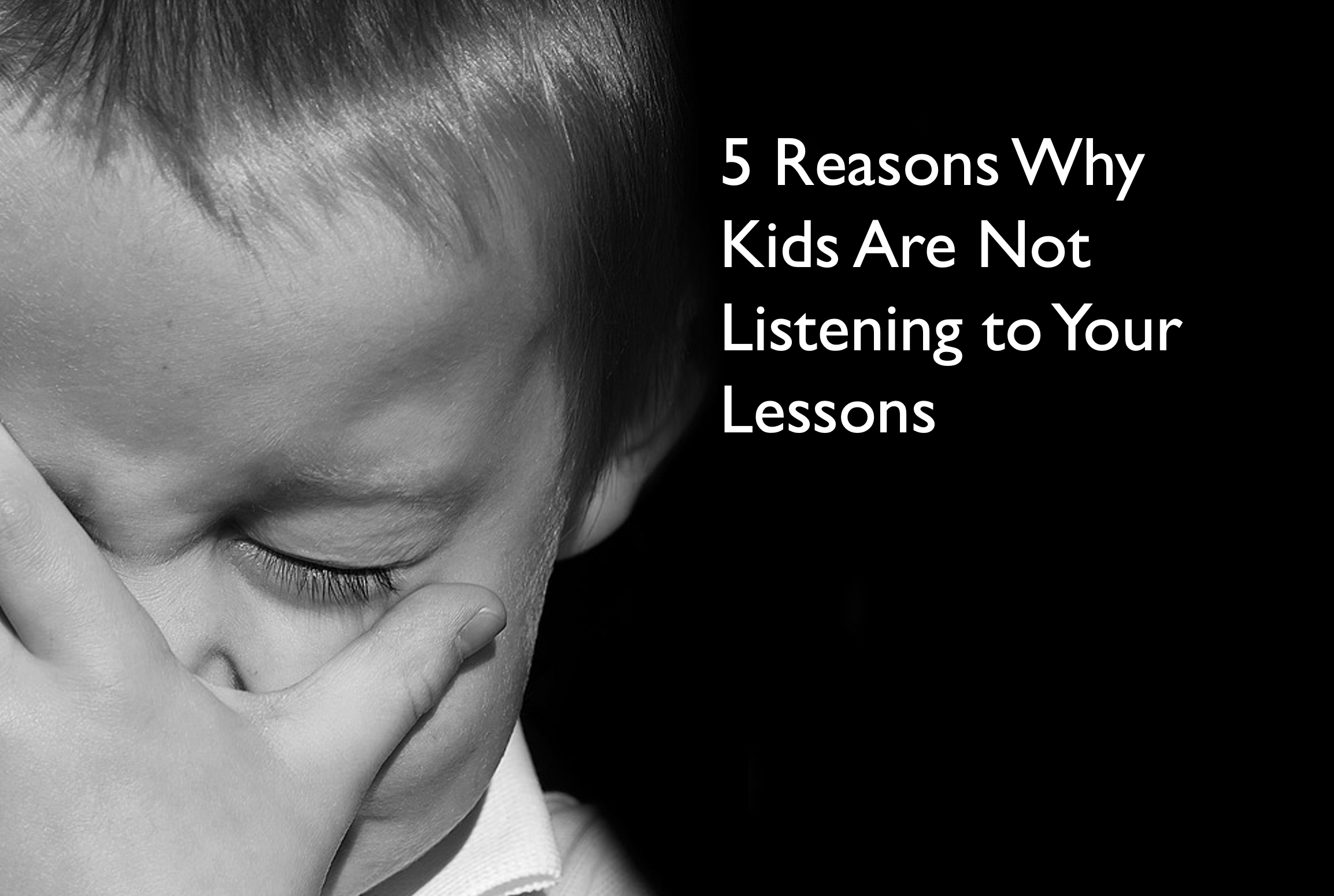
5 Reasons Why Kids Aren't Listening to Your Lessons

Do you ever have trouble with getting kids to listen to your lessons? 

If the answer is "yes," then you are not alone.  We've all had times where it seemed we couldn't get the kids to engage with our lesson. 

I have found that when I am having trouble with the kids listening, that it is often on me.

I am not doing one or more of the following five things. 

They are not listening to the lesson because I am not honoring their attention span.  Today's kids have very, very, very, very, very short attention spans.  They constantly have messages coming their way through smart phones, TV ads, radio ads, laptops, tablets, etc.  In fact, they have so many messages coming their way that they will often just give the information a quick glance and if it doesn't grab their attention, they are off to see or hear the next thing coming their way.

So what can we do?  How can we get kids to listen to our lesson in the world of thousands of messages?

Here's a simple secret that can help you capture (and keep) their attention.

Every 4-5 minutes, reset their internal clock.  When you do this, you will be honoring their attention span and you will be able to keep their attention. Instead of looking at your lesson as a 60 minute stretch, look at it as 12 five-minute sections.  Every 5 minutes, switch and do something else. 

Here's a practical example.  Teach for five minutes and then switch and have them do some discussion questions for five minutes.  Then go back to your teaching for five minutes.  Then stop and do an activity for five minutes.  Then go back to teaching again.  

Sesame Street is one of the most engaging children's programs ever created.  Their 52nd season premiered on HBO Max on November 11, 2021.  Watch an episode and you will see this teaching philosophy in action. The show is divided into short segments that change every few minutes. 

With this in mind, I created a curriculum that honors kids' attention spans. Implement this philosophy and you will see the issue of kids not listening go away (including the 2nd grade boys - which is a miracle). You can see curriculum samples at this link

They are not listening to the lesson because you are not telling stories.  Take notice of this the next time you are teaching. When you start telling a story, you will notice that the kids engage with you.  Once the story is done, you can see them physically disengage.  They will start looking around, talking, fidgeting, etc. 

Did you know that Jesus, the greatest teacher of all times, used stories when He taught?  In fact, the Bible says He always told stories.  Stories that captured the attention of those who had come to hear Him. Check out this verse. 

Jesus always used stories and illustrations like these when speaking to the crowds. In fact, he never spoke to them without using such parables. Matthew 13:34

Follow His teaching method and you will see kids begin listening to your lessons.

They are not listening to your lesson because you are not intentionally giving them opportunities to talk.

Kids learn best through dialogue instead of monologue.  They are not listening to your lesson because you are saying...sssssshhhhhhhhhh...instead of asking them questions and getting them to talk about the subject you are sharing about.  

Here's another tip when it comes to asking kids questions. Yes and no questions won't cut it.  If you really want to see them engage in dialogue, then ask open-ended questions.   

Don't be a talking head.  You'll have a hard time getting them to listen.

They are not listening to your lesson because you're not making it relevant to their life.  God's Word never changes. But how we present it must change so we can help children engage with it.  Here's an example.

Kids love video games.  They spend hours trying to "get to the next level."  What if you used this to help them understand this verse?

But grow in the grace and knowledge of our Lord and Savior Jesus Christ. To Him be glory both now and forever! Amen.  2 Peter 3:18

Connect this to trying to get to the next level in a video game. You don't want to stay on the same level. You want to get to a new level.  It's the same with growing in your faith.  We should strive to get to the next level in our relationship with Jesus through prayer, reading God's Word, asking for His help, etc.  Then encourage them to remember this each time they are playing a video game. 

You start talking about video games...something very relevant to their life...and you will have their undivided attention.

They are not listening to your lesson because you're not building a relationship with them.  We've all heard this saying - 

"People don't care how much you know, until they know how much you care."

When children know you care about them, they will listen to what you have to say. Build a relationship with them.  Spend time before class talking with them and getting to know them.  Call them by name. Look them in the eyes and and let them know you are so glad they came.  

I intentionally put icebreakers into the Connect12 curriculum so teachers and small group leaders can get to know the kids in their class or group.

Work on improving in these 5 areas and you will see kids engage and grow in their faith. 

The Smallest Footprints

Those little footprints that follow in your steps?  One day they will be large footprints that make a huge impact in God's kingdom. 

You have been given the incredible responsibility to help lead and guide those footprints in the way they should go. 

We must always keep in mind that there is another generation that is following us.  Watching.  Inquiring.  Absorbing.  Imitating.

Your success will not be based on something that you pass along to the next generation.  Rather, it will be someone you passed on to the next generation. 

Guide them carefully.  Share wisdom from God with them.  Spend time praying for them and with them.  Help them get on a path that leads to Jesus. 

And always remember...there are a small set of footprints following you.  How does that inspire you and what action does that compel you toward?

Don't forget this Friday, Nov. 27th, I am starting our big Christmas sale.  Sale runs from Nov.27 - Dec.15. Huge savings on curriculum, milestone classes, worship songs, books and so much more.  30-50% discount on many resources.

Sale will be at our sister site - www.buildingchildrensministry.com.

Everything you need to get ready for 2021.  Here are a few examples...

Curriculum was $79 - sale price $49

Lead Well book was $19 - sale price $15

Parent & Child Dedication milestone was $49 - sale price is $29

and much, much, much more. 

Be sure to put it on your calendar and check out the great savings starting on Friday. 

Curriculum Lessons Kids Will Remember for a Lifetime

Do you remember a message you heard 6 month ago?  Probably not.  I know I can't. 

Most lessons are not written to get into kids' long-term memory.  The lessons are missing key elements that cause the teaching to move from short-term memory to long-term memory.

If you want kids to remember your lesson for years to come, then here are some key elements you need to include. 

Repetition.  It has often been said that repetition is the key to learning.  

Did you know that if a child hears something once in a month their long-term retention rate is only 10%?  But if a child hears something 6 times in a month, their long-term retention rate jumps up to 90%!  An effective lesson will have the kids say the key truth at least 6 times in a month.  In the curriculum I created, I actually have the kids say the key truth a minimum of 6 times each week.  This helps ensure they will remember the key truth long-term.

I recommend you have one key truth the kids say each week for a month.  This is more effective than having a different key truth each week. 

Emotions.  You remember what you feel.  Create situations where kids emotions are tapped into.  Here's an example.  

One weekend we were teaching about being generous.  When the kids came in the room, they were each given a bag of candy.  They were instructed to place it in front of where they were sitting.  The lesson was about being generous.  At the end of the lesson we had them bow their heads.  We explained that they had two options.  One - they could keep the candy for themselves.  Or they could leave it and it would be delivered to some needy kids in our area.

We asked them to close their eyes and talk to God.  What was He telling them to do?  You could feel the tension and emotions in the room.  When it was decision time, most of the kids left the candy.  

That is a lesson they will never forget.  Why?  Because they felt the emotions of what they were doing.

Pictures.  Today's kids hear with their eyes.  A picture truly is worth a thousand words.  Use pictures for key points and kids will connect to the lesson and remember it.

Experiences.  We live in an "experience economy."  Kids remember their good and bad experiences growing up.  What will they remember about their experience in your ministry?  Boring?  Monotone?  Exciting?  Engaging?  Relevant?

Videos.  Kids love watching videos.  Movies.  YouTube.  Instagram.  Television shows.  Use video clips to illustrate your lesson.  

Here's an example.  in the Lion King movie, remember the scene where Simba is trapped in the gully and is about to be crushed by the stampede?  At the last moment, Mufasa comes down into the gully and rescues Simba.  Mufasa gives up his life to rescue Simba.  This is a great example of using a video to illustrate Biblical truth.  Mufasa is an example of what Jesus did for us.  We were trapped in our sins.  There was no way we could get ourselves out of it.  But that's when Jesus came down and rescued us.  He gave His life so we could escape the penalty for our sins.  

Each time kids see this movie, it will help them remember what Jesus did for them.

Big surprises.  What can you do to surprise everyone?  These are things you can't do every week but you can do to make a big impact on a big day.  This is when you go all out and over the top.  Here's an example.  One Sunday, I was teaching on Daniel and the Lion's Den.  I had a big cage up front that was covered by a canopy.  When we got to the part of the lesson that talked about the lions, we pulled the canopy off the cage and there was a real, fully grown lion inside the cage.  He let out a roar and the kids were blown away.  If you ask those grown-up kids today about that lesson, they will remember it.

Every day objects.  Jesus often did this.  He used birds of the air, fish, coins, gates and other everyday objects to illustrate what He was teaching.  Take a cue from Jesus and use every day objects in your lessons to illustrate Biblical truth.  

Use items and places that kids are in contact with on an regular basis.  Something from school.  Their favorite toy or video game.  A pet.  A ball from their favorite sport.  A food they eat.

I remember when I taught a lesson about Jesus being the only way to heaven.  I used a one way sign to illustrate it.  One year later, I was driving the kids to camp and a boy on the back of the bus yelled out, "Look Pastor Dale, a one way sign.  Jesus is the one way to heaven!" 

Key truths that rhyme.  Did you know kids remember things better when they rhyme.  All 12 of our key truths rhyme. Here's 3 examples.

The Bible is true...I can trust it through and through.  

This is my story...worshiping God and declaring His glory.

The Bible is clear to say...Jesus is the only way.

Play games.  Activity games.  Icebreaker games.  Review games.  All of these are great ways to move your teaching truth into kids' long term memory.  

Want to do a test to see if you are getting truth into the lives of kids?  Stand at the exit door and ask them what they learned today.  Ask them to say the key truth of the month.  If they can say what it is, you're getting it stuck in their memory. 

The curriculum I created has all these elements in them.  I created a filter that every lesson had to pass through before it was completed. You can see samples of the curriculum by clicking on the logo below.

Our goal must be to get God's Word into children's long term memory.  When we do this, we will begin to see their faith grow and they can serve God for a lifetime.

CLICK ABOVE