Showing posts with label "churchchange. Show all posts

5 Gen Z Trends You Need to Know About

Gen Z are people who were born between 1997 and 2012. This means they are between the ages of 8 and 23.   
They are are growing up in challenging times. A world-wide pandemic, demonstrations against injustice, and an upcoming election that is polarizing.  There is uncertainty, fear and challenges.  This is the tumultuous world they are growing up in.
 
Ministry as "normal" may or may not return.  It is definitely a time when we should be looking at our ministries and asking the hard questions about the best route to take for ministry in the days, months and years ahead.  
 
Let's look at 5 important trends that you need to know about as you have these discussions and make your plans for the future.  

These trends are from the Barna company and represent in-depth research and strategies that can help you navigate what's ahead for us. 

1. Gen Z Navigating More Screen Time.  The average Gen Z'er uses media for entertainment an average of 8 hours per week.  And this was amplified once the pandemic came.  Millennial parents and their Gen Z kids have increased their screen time significantly.  

Barna's research shows that the majority of pastors (85%) are concerned about this increase of screen time but do not yet have a plan to help families have wise tech usage.  

Much of this increase is from Millennial parents trying to keep their Gen Z kids occupied during the day at home.  Media has become a handy babysitter for Gen Z kids.  

Is this going to be the "norm" moving forward?  

Will churches step up and help families decide how much screen time is the best for their family situation?

Once "normal" returns, will the viewing patterns from the pandemic continue?

2. Responding to Injustice.

Gen Z wants to hear the stories of injustice and wants the church to respond and answer the important questions regarding this. 

Gen Z is more ethnically diverse and more politically progressive than their elders.  Recent data shows that 38% of Gen Z believes we have a race problem and 68% want to address racial injustice in our country.  

3. Loneliness and Anxiety.  

Even though Gen Z is the most digitally connected generation of all time, they have feelings of loneliness, anxiety and stress.  Mental health issues have grown since the pandemic disrupted their lives. 

They are searching for connections and are looking to the church for help with this.  The church must step up and give Gen Z lots of opportunities to make meaningful connections. 
 
4. Continued Faith Growth.
 
Research shows that Gen Z is likely to not see church as important.  59% say that church is not relevant to their life.  48% say they find God elsewhere.  28% say they can teach themselves what they need to know.
 
While 22% have left the faith, 38% are faithful churchgoers. 

We must help Gen Z see how important it is to be a consistent church-goer.  This will help their faith continue to grow.  

5. New forms of outreach and sharing their faith.

Gen Z kids are often hesitant to share their faith.  Alarmingly, a poll revealed that 47% say evangelism is wrong.

What they may or may not realize is that sharing their faith is vital.  If they will look around, they will see that unbelievers are curious about spiritual matters and are open to having discussions about it. 
 
These 5 trends give us a glimpse into the ever-evolving myriad of ministry opportunities.  A great starting point is to sit down with Gen Z kids and listen to understand what they are facing and talk with them about the best says to engage and disciple young people in this day. 
 
Your turn. 
 
Do you see these trends happening in your ministry?
 
What can we do to effectively minister in the context of these trends?
 
Share your thoughts with everyone in the comment section below.

Building Kids Faith in the Bible

The B-I-B-L-E...yes that's the book for me.  I stand alone on the Word of God...the B-I-B-L-E. 

If you grew up in church, you remember that song.  It was an attempt to instill the Word of God into the hearts of children. 

We are living in a day when the Bible is under attack.  Just this past week, protestors in Portland, Oregon made a spectacle out of burning a pile of Bibles.  While that was a physical attack, it doesn't end there.  All across the country and the world, the Word of God is under attack. 

People who say it's just like any other book.

The removal of Bible verses from public monuments.

Professors who stand in their classroom and belittle the Bible.

Television shows and movies where the Bible and those who follow it are portrayed as nutcases.

Go ahead.  Say the Bible isn't the Word of God.  You have the right to be wrong. 

I believe the Bible is the Word of God. 

I believe it is true from cover to cover.

I believe it is historically accurate. 

I believe it is error free.

Burning a few copies of God's Word won't stop it. 

Have you ever read the story of the French philosopher Voltaire (1694-1778)?  Voltaire, in his writings against Christianity and the Bible, predicted in 1776, “One hundred years from my day, there will not be a Bible on earth except one that is looked upon by an antiquarian curiosity-seeker.”

But within fifty years after his death, in an ironic twist of fate, the very house in which Voltaire once lived and wrote was used by the Evangelical Society of Geneva as a storehouse for Bibles and Gospel tracts and the printing presses he used to print his irreverent works was used to print Bibles. 

You can't stop the Word of God and you can trust it. 

It is crucial that we transfer this belief into the hearts of the next generation that is following us.  Let's look at a few ways you can do this.

Tell the next generation the Bible is the Word of God over and over and over and over...

I know a well known pastor who took a strong stand on the Bible being God's Word.  He traced his strong stand on the Bible all the way back to when he was a child.  Every night before going to bed, his mom would come and tuck him in.  She prayed with him and read a few Bible verses with him.  And then she held up the Bible and had him say this phrase over and over and over...the Bible is the Word of God! 

Show the next generation the proof that the Bible is God's Word.

Hundreds of prophecies fulfilled.

Endurance for thousands of years.

The Bible is self-authenticating.

People who gave up their life for saying the Bible is true.  People don't give their life for something they know is not true.

Take a look at some of the verses that agnostics say are errors.  Have kids work through those verses and come to the conclusion that the Bible is true.  We did this with the Pranksters Series.  We actually had kids look at verses and passages that atheists say are errors and find out for themselves why the verses are not errors.  You can get this teaching series here - Pranksters.

You can also reinforce that the Bible is God's Word with music.  When kids hear a song that emphasizes that the Bible is God's Word, then it helps impress this truth.  Check out this song that teaches kids that the Bible is true and you can trust it through and through.

Teach kids to memorize key verses/passages that will help them defend their faith.  The Bible tells us that we must be ready to give an answer when someone attacks the Word. 

Get tools and resources into the hands of parents, so they can disciple their children with the Bible.

Our faith hinges on the fact that the Bible is God's Word and you can trust it.  It must be a top priority to teach kids that they can trust it in all areas of life.

How to Lead Well Through Major Change

The coronavirus has caused all of us to make some major changes in how we do ministry, hasn't it?

Pre-virus there were only a handful of kid's ministries that offered their kids' services streaming or on demand.

Now nearly every ministry in the country is streaming their weekend kids' services as well as other times they can engage kids and their parents.

Change is never easy.  Especially when you are forced into it. 

There is no doubt the way we do ministry will change in some aspects due to the virus.  Wherever change leads us, we must be prepared to lead well through it.

Let's take a look at a few of the ways you can effectively lead well through change.

Lead well through change by having excellent communication.  Focus first on the "why" behind the change rather than just the "what" of the change.  Explain the purpose of the change.  Share how it is connected to the values of your team.  Show the benefits that will help the ministry become stronger.  Communicate early and often.

"You can't leave team members in the dark during the week and then expect them to shine on Sunday."

Lead well through change by including team members in the decision making.  It is crucial that you bring people together to plan out the steps to the change.  When there is collaboration, there is buy-in.  The change will go a lot better if you include people in the planning.  And remember this...


"The smartest person in the room is the room."


Lead well through change by being resilient.  Change is not easy.  That's why you can't give up.  Stay focused.  Stay positive.  Guard your heart. 

Some of your plans you may not see come to fruition until years from now.  And you'll probably have some miscues and blunders along the way.  But don't be diverted by these things.  Stay faithful.  God is by your side and it will come to pass in His time.

You can get lots more about leading through change well in my new book - Lead Well in Children's Ministry.  Here is what the book covers.

Lead Yourself Well

Lead Team Members Well

Lead the Ministry Well

Lead Parents Well

Lead Change Well

Lead Through Challenges Well

Lead Up Well

Lead Multi-site Well

Lead the Next Generation Well

Lead Well for the Future

You can prepare yourself to lead well in all these aspects of ministry with this book.  It comes from over 30 years of experience leading in children and family ministry.

Get your copy today.  Available in paperback and digital formats at www.buildingchildrensministry.com.

What to Do When Your Volunteers Don't Want to Come Back Because of the Pandemic

As we continue to search for a vaccine and cure for the Corona Virus, many people are still hesitant to go out and mingle with others.  And rightfully so.

The virus is reshaping the daily routines of millions of Americans. 

It is also causing many churches and other non-profits to struggle with a lack of volunteers.  This could impact crucial service for the most vulnerable people.

I have been listening to what church leaders are saying as they work through opening their physical campuses back up.

They are asking some great questions.  One of the questions is "What will we do when older volunteers are hesitant to come back to serve - because of the virus?"  Many of the older volunteers are saying they will not be back to serve until there is a vaccine available to cure the fast spreading virus.

This can really have an impact on children's ministries because in many ministries we depend on Boomers to serve and fill key roles.

Here are some key points that can help you navigate what to do when your older volunteers are hesitant to serve during this time.

People come first.  Older adults are more likely to have serious health issues when they catch the virus.  With the virus reshaping the daily routines of millions of Americans, many nonprofits are struggling with those age 65 or older,” says Dr. Natasha Bhuyan, a family physician in Phoenix, Arizona.

“The reason why is because our immune system is less effective at fighting infections as we get older. Also, having multiple other chronic diseases can complicate this virus.”
       
This means we should put our senior adults first.  Especially those who already have an underlying
condition.  Don't place your senior adults in serving situations where they are likely to catch the virus or spread the virus.


"Use the ministry to build people, not the people to build the ministry,"


The quote above should be often considered.  Don't bring risk to senior adults just because you have some vacant volunteer roles open.   There may be other roles they can fill for the time being that don't require contact with people.

Enlist new volunteers.  This is a great opportunity to share the vision of your ministry and how people can make a difference in the lives of other people.  People are tuned in to helping other people in this season. Remember to emphasize the "why" of the ministry.  You can get many more great ideas for building a volunteer team in my book "The Formula for Building Great Volunteer Teams."   It's available at this link.

Realize some volunteers were looking for a way out.  The virus is the exit door they have been looking for.  Thank them for their service and lovingly let them walk away.  You want people on your team that want to be on your team. 

Consider doing children's ministry differently until you can ramp back up to full speed.  You may need to adjust some classrooms.  Drop some activities you were going to do.  Move to doing a lot more things online.  Think about some games you can play online with the kids (make sure you have parents' permission).  You can share a devotion each week online.  Perhaps it means sending the lesson plans and activities to parents and having them do the lesson with their child.

Make sure your volunteers know all the steps you are taking to keep them safe from the virus.  Share with them that people are wearing masks,  everything is being sanitized,  no one is allowed to come into a the classroom if they have a fever, etc.  These steps may be the difference between someone who chooses to serve and someone who doesn't.

Some of the best volunteers I have had the privilege to serve with were senior adults.  While I want to see them be able to serve, I first and foremost want to protect their health.  That's why it's so important to have a serving plan that will protect them.

Your turn.  The floor is yours.  What are you doing to encourage volunteers to continue serving?   What safety measures are you putting in place?  

Share your ideas and insight in the comment section below.

7 Reasons Why Online Church Can't Replace In Person Church

On March 11, 2020 the Coronavirus Disease, COVID-19, was declared a pandemic by the World Health Organization. On March 13, 2020 a national emergency was declared in the United States concerning the COVID-19 Outbreak.

With this has come many changes that have effected the church. 

In my opinion, the biggest change has been not being able to meet together in person. 

The vast majority of churches have went online and it has forced so many of us to rethink how we do church services.  Before the pandemic arrived, I could count on one hand the number of churches who offered online children's ministry services.  Now every church I know of has online services and experiences for kids.  It has been amazing watching churches respond with online engaging, relevant content for kids and parents.

And most of the churches I talk with are going to continue offering both adult and children's services online.  I believe we will look back one day and see that this pandemic caused a majority of churches to go online and stay online.

Online offers so many ways to connect with today's families and it makes sense.  We are living in an increasingly digital world where doing and attending online is a viable option.  And offering the services "on demand" fits right into our culture of instant gratification.  Will "church" become a "Netflix" church where people can choose from week to week what they want to watch?

Yes.  The Gospel can be spread online. 

Yes.  People can grow spiritually using online materials. 

Yes.  You can pray together with other believers online.

But, with that being said, here are 7 reasons why church online will never completely be able to replace meeting together in person.

Reason One - personal discipleship happens most effectively when you are with other believers. 

We are called to...

"Go and make disciples of all nations, baptizing them in the name of the Father and of the Son and of the Holy Spirit, and teaching them to obey everything I have commanded you. And surely I am with you always, to the very end of the age.”   Matthew 28: 19-20

These are all things that need to happen in person.  Baptism happens publicly.  Obeying and living out the commandments of Jesus happens publicly. 

Reason Two - Corporate Worship We need to worship in person with other believers.  Worship online is a good thing, but it can't compare to being surrounded by a group of other believers who are worshiping.  Jesus inhabits the praise of His people.  We were meant to worship together. 

Solo no. 

Choir yes. 

This is a warm up activity to prepare us for the day when we will all meet together to worship Jesus.

One area that does concern me is parents won't feel the "good pressure" to attend church in person.  One father said before the children's online services started happening, he would often go to church because it was the only way he saw his child learn about the Bible.  But with the addition of online services for kids, the pressure to attend in person has lightened.  Now when he doesn't feel like attending in person, he can hand his child a tablet to watch the online children's services.

Don't get me wrong, I am so thankful for all the churches that have dedicated the time and money it takes to create online services for kids.  Any most of the churches I consult with say they will continue to provide online services for kids after the pandemic has been controlled.

It will be interested in seeing how this plays out.  Will some families switch over to all online services?  Maybe.  Will online services  be enough to keep kids' attention?  Will churches have the fiances, people and bandwidth to continue offering online services? 

Reason Three - Relationships.  It is through relationships that discipleship happens. It is through relationships that spiritual growth happens.  It is through relationships that people are able to grasp the unending love of Jesus. 

Every child needs someone who will look them in the eyes and say their name.  Someone who can pray with them.  Someone who can challenge them.  Someone they feel comfortable enough with to share what 's going on in their life.

Reason Four - Accountability.  We were not meant to walk alone.  We need other believers who can look us in the eyes and hold us accountable.  We need other believers that will ask us the hard questions and help us stay on course.  

Reason Five - Serving togetherThe biggest impact happens when believers serve with other believers.  Serving Jesus wasn't meant to be done solo.  When you lock arms with other believers, you become so much stronger.

Reason Six - Giving together.  Great things happen when believers gather their funds together.  A single tithe can make an impact.  But when you gather your tithes together toward a project it can make a huge impact.

Here's an example of this - Many churches are doing a $1 challenge.  Everyone is challenged to give $1 dollar toward making an impact in someone's life.  When you put all of the dollars together, it gives you the finances you need to help change someone's life. 

Reason Seven - The presence of Jesus.  Look what He says about worshiping and serving together.

"For where 2 or 3 are gathered together in My name, I am in the midst of them."
Hebrews 10:25

Notice that it says you should gather with a minimum of 2 people.  And I believe when He's referring to gathering, He is talking about gathering in person.

"There's something special that happens when you gather
with other believers.  Jesus shows up." 

Maybe that's why the author of Hebrews said this.

"And let us not neglect our meeting together, as some people do, but encourage one another,
especially now that the day of his return is drawing near."
Hebrews 10:25

And when Jesus shows up, it changes everything.

Your turn. Do you think online church can or can't replace in person church?  I realize that most of the points I mentioned above could also happen online.  But the bigger question is "Can it be as effective as in person church?  What can and cannot be transferred to online? Share your thoughts and insight in the comment section below.

How to Help Kids Who Can't See Their Friends and Family Due to the Pandemic

I miss being able to see my grandmother.  She is in a nursing home and it is locked down due to the pandemic.  No outside guests.  Haven't been able to see her for over 3 months now.

I don't think I am alone.  Many, many people are feeling sadness and loss from not being able to see some of their family members and close friends. 
 
This can especially be true with kids when they can't see their grandparents, cousins, close friends, etc.
 
Let's look at some practical ways that we can help kids who are dealing with this.

Connect virtually.
Zoom.  Skype.  Facetime.  Messenger.  These are just a few of the platforms you can use to connect with family and friends.

During this time, we have been playing an online game with our adult kids called House Party.  It allows you to not only see each other on your smart phones, but also has fun games you can play together online.  Be intentional and schedule times to connect with each other online. 

Talk about fun times you've had together.  This is a great time to look through old photographs and watch those wonderful family videos you have stashed away.  This can deepen your relationships even when you are apart.

Our family started a memories box many years ago.  We put important things in the box that will remind us of events and memories that we have shared over the years.  A ticket to a show you saw together.  A flower from a graduation ceremony.  An airplane ticket to a great place you went on summer vacation.  A sea shell you picked up on family vacation to the beach.

Remind them that it's only temporary.  Yes, it has been months...long months since we were told not to get out.  And it may be several more months before we can engage in a "normal" or "new normal" life.  But remind your kids that it won't last forever.  For kids, time appears to move slower.  Remember how long it seemed until Christmas or a birthday finally came when you were a kid?  Let kids know that this is not a permanent way of life.

Let them know they will be able to get out and see their friends and family before long.  If you have specific dates when they say we can get out and about, share that date with them.

Model how to manage your emotions in a situation like this.  Kids pick up on our emotions and will imitate us.  Make sure you keep a good, positive attitude during these times of separation.  Show a spirit of gratitude for the blessings you do have.  When you increase your gratitude,  you will find that it helps decrease anxiety.  Rather than spending the time talking about the pandemic, focus on the fun things that will happen when you are able to be together again and good memories you have from the past.

Initiate contact.  Reach out to friends.  Contact family members.  Don't sit back and wonder if anyone is going to contact you to talk and catch up.  Take the initiative to connect kids to the people they miss seeing.

Help them see why this is happening.  
A big question kids may ask is "Why is God allowing this to happen?"  That's a question you need to be ready to answer because not addressing it could hinder their faith in God if not answered correctly.  In this previous post, I share what to tell kids when they ask this question. 

And if kids don't ask the question, then take the initiative and talk with them about it.  You want kids to have the right answers to critical questions.  And the right answers need to come from you.

Your turn.  What else is helpful for kids during this time?  We'd love to see your thoughts, ideas and insight in the comment section below.

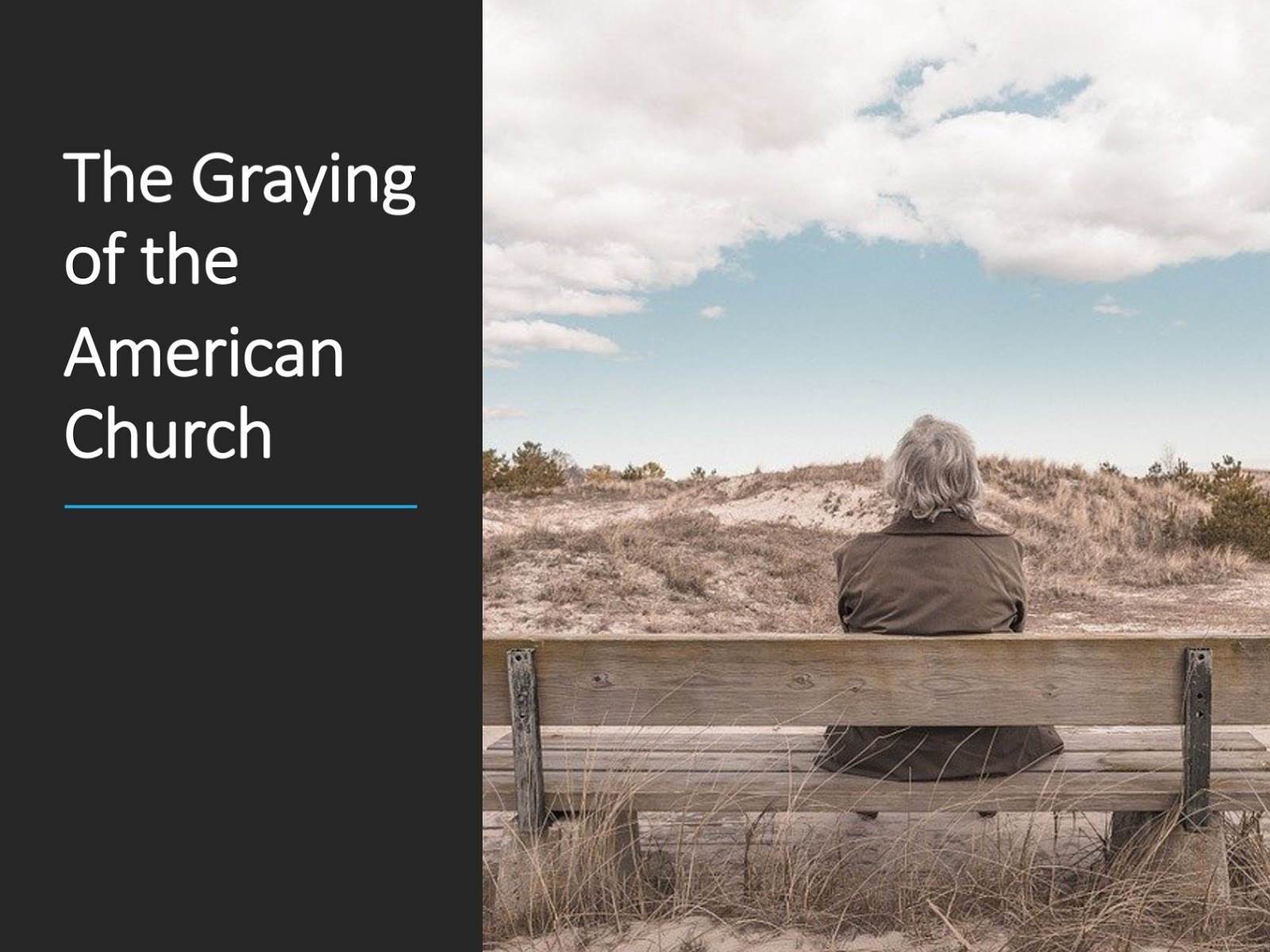
The Graying of the American Church

Let me start off by saying I love the senior adults in our ministries.  They bring wisdom, experience and knowledge to the table.

With that clarified, I want to shift and point out a challenge that we must face and meet if we are going to see our churches reach future generations.

The American church is becoming more and more gray with each passing year.  Getting older is a part of life.  I have a lot of gray hair myself.

But left to coast in neutral, most churches will naturally grow grayer every year.  Then one day, they will look up and see that the next generation has left the building.

It takes intentionality to reach succeeding generations. It must be done by keeping the church balanced with the wisdom of older generations alongside the zeal and passion of younger generations.

It also takes the older people of the church to look beyond themselves and seek the changes that must be made to reach their children and grandchildren along with the young families in their community.

One area this shows up is in the worship music.  Music is important to every generation.  Generations get used to a certain style of music.  Usually it's what they grew up with.  Go messing with their music and you will ruffle some feathers.

But the churches that are growing and reaching the next generation are churches where the older members are willing to lay aside their preferences so the next generation can be reached and thrive as leaders in the church.

Want to know how healthy your church is?  There is one place we can go to and see how healthy your church is.  What area is it?  Look into your children's ministry.

Does your church have any babies in the nursery?  How about preschoolers?  How about elemetary-age children?  What about teenagers?

If the answer is "no," then here is the sad news I need to share with you.  Your church is dying.  And when the older people in your church pass away, your church will have to close it's doors. 
Where there is no crying in the nursery, the church is dying.
I was at a church last year and as I looked around I saw that they had no children in the church.  Not one baby.  Not one preschoolers.  Not one elementary student.  No teenagers.  As I sat in their services that morning and looked around, I saw mostly gray hair.  I thought to myself, "This church is terminal."  Unless they start reaching the next generation, they will eventually have to close their doors.

As we talk about reaching the next generation, we must look closely at the Millennials.  They are the young parents in your community.  By 2030, they will represent 75% of the workforce in the country.  The big question is "will they be 75% of your church as well?"

For many Millennials, church is irrelevant.  The number of people who do not have a "religion" has grown by 40% in the last 30 years.

The next generation is growing up in a post Christian world.  Many are Biblically illiterate.  Bible stories like Moses and the burning bush are not common knowledge among them.  But they want to learn and are very open to it.

At the same time, they are observing leaders who say one thing and live something else.  Authenticity is crucial if you want to bring them to your leadership table.

Older church members must understand that the next generation is ready to step up and lead.  But they want to lead not from an authoritative structure, but from a collaborative structure.  This is a big shift for most of the older leaders.

Here are a few more tips that can help your church have a good balance of gray-headed leaders alongside a group of young leaders.
  • Listen to them.  Younger leaders want to have a voice.  They want to be heard. 
  • Build relationships with them.  They respond best to leadership that is grounded by relationship.  Yes, they love coffee?  Why?  Because coffee represents more than having coffee. It represents building a relationship through talking with another person.
  • Mentor them.  They want to be invested in by older leaders.  
Any church that is willing to reach out and connect with the next generation of leaders, can grow their church now and in the future.

Remember this - a healthy family is made up of all generations.  Children.  Teenagers.  Young adults. Middle-age adults.  Senior adults.

I want to enocurage you to do this - the next time you are at church take a look around.  How much gray hair do you see?  Is the gray balanced with the edgy hair styles of youth as well? 

I pray you will be passionate about reaching the next generation.  Hold your "style of ministry" with open hands.  Be willing to change and adjust...even when the changes are not your preferences.

The spiritual future of the next generation is depending on it.