Showing posts with label #teachingkids. Show all posts

Why Older Kids Are Bored With Your Lessons...And How to Fix It

Are you having a hard time getting older kids to engage with your lessons? Are older kids saying your lessons are "boring?"

Let me help you fix that. Take a look at this quote from the master of helping kids engage with you.  None other than the man himself...Walt Disney. Here is what he said about this. 

It was the first entertainment that Walt Disney had ever designed expressly for children. ‘But we’re not going to talk down to the kids…let’s aim for the twelve-year-old. The younger ones will watch…
they’ll want to see what their older brothers and sisters are looking at.'


Walt knew that you have to aim high. In other words, if you’re trying to connect with kids of various ages in a large-group setting, always target the oldest kids in the group. If you connect with the older kids, you’ll grab the attention of all the kids.

Marketing experts know and practice this principle. I took their advice and created these guidelines for children’s programming

Target the oldest boy in the group. In other words, appeal to your oldest boys and you will appeal to everyone.

Choose music that will appeal to the oldest kids in the group. Know what style of music the oldest kids in your group are listening to. Nothing will turn off your group quicker than playing songs that sound too “babyish.”

Feature older kids in your graphics and videos. Our elementary print pieces contain pictures of the oldest kids in the age group. If we do a video or skit involving kids, we normally use fifth-and sixth-graders as actors.

Use the oldest kids in the room on the praise team. If the oldest boys in your group are standing around with their hands in their pockets during worship, check who’s leading. Our praise team is comprised of the oldest kids in the room, junior and senior high school students, plus adults.

Use clips from movies that upper elementary kids think are “cool.” If your clips are from movies aimed at upper elementary kids, you’ll engage all grades.

Bring in upper elementary kids, and ask them to rate the “coolness” of your programming. They can quickly help you identify what needs to be adjusted.

Take cues from pre-teen marketers. They can give you valuable ideas on how to connect with today’s older kids.

Have the oldest kids sit up front. Before I saw this quote from Walt, I would put the youngest kids up front and the older kids in the back. That was a mistake. When older kids see "little" kids in front of them, they will disengage because it appears to be for the little kids. 

Flip that. Put the oldest kids up front. This will help you engage all of the kids. Younger kids will look up front and see the older kids are engaging and it will cause everyone to engage. 

If older kids are bored with your lessons or events or programs, try this simple idea from Walt and you will see immediate results.

Have you read the best selling book "If Disney Ran Your Children's Ministry?" It has lots of great tips for engaging kids with your lessons. You can get it at this link

The Number 6...Why It's Critical to Teaching Kids

Did you know the number 6 is a key part of effectively teaching kids?

Here's why. 

Studies show that if a child hears something one time in a month, they will only remember about 5% of it.

But...if a child hears something 6 times in a month, their retention rate goes up to 95%!

Here is a practical way to put this into practice. 

Each month, make sure you have the kids repeat your key teaching verse and truth at least 6 times.  If you will do this, you will see the verse and truth go into their long-term memory. 

When the verse and truth is transferred into their long-term memory, they will remember it when they are in college one day and are faced with temptations and attacks on the Word of God.   

Personally, I have kids repeat the key truth at least 6 times each week. I want to make sure they get it for life.  

Here's the cool thing...when I do this, it is amazing that kids can repeat the key truths and verses years later when I ask them to share what they've learned.

If you haven't checked out my curriculum series called Connect12, you should take a look at it. Connect12 teaches kids 12 critical truths over the course of a year...one truth each month. Take them through this curriculum and it will be embedded into their memory for life. 

You can see the curriculum and get a preview at this link.  It is great for small groups, large groups, and mid-week Bible study.  Try a month and watch the kids get it for life. 

6...remember this number...it can be a game-changer for the kids in your ministry.

12 Things That Concern Me in Children's Ministry

As I look at the trends and pathways of children's ministry, there are some things that concern me. 

These are things that I believe we must address and search for ways to correct them.

Below are the 12 things. Take a few minutes to think about these. 

Lack of Biblical knowledge.

Biblical knowledge alone will not help kids be discipled. But it is crucial that kids know God's Word if they are going to apply it to their lives.  You can't apply what you don't know. 

Kids not knowing why we believe what we believe.

The number one reason why kids grow up and leave the faith is because they simply don't believe anymore. 

We must teach kids apologetics.  We must help them work through the tough questions and find the correct answers. 

If we don't, when kids are exposed to the wrong answers, they will not be able to stand against the doubt and confusion that will be brought their way. 

Like the seed that fell into shallow soil, they will wilt away when the pressure from unbelievers comes.  

Shallow faith greatly concerns me. 

Lack of prayer.

I see a lack of prayer in our ministries. Children who make an impact even at an early age are kids who are taught how to pray. 

A few months ago, I decided to try something bold when it comes to prayer. I started blocking out 10 minutes of time during class to pray. 

I have the kids get down on their knees. I wondered how this would go. Surprisingly, the kids got down on their knees...even the kids who are normally a little "rowdy."  A hush came over the room and we began to pray. We have a list of needs in our church and we pray though that. We also pray for God's forgiveness in areas we have sinned and spend time thanking and praising God for who He is.  

It has been a game changer for many of the kids. 

If we are going to the see the next generation move forward for God and serve Him for a lifetime, it will happen when they spend time with God in prayer. 

Inconsistent church attendance.

As I talk with and interact with churches across the country, the same attendance pattern emerges.  Families with children are attending church once or twice a month or even less. 

This means children are missing 50-75% of the lessons. What would happen if children missed 50-75% of their school lessons. It would be difficult for them to master the subjects they are studying. 

The same can be said of church attendance. It concerns me that a big majority of the children who attend our churches are only getting 25-50% of the teaching.  It's hard to get a solid faith foundation when you are not there consistently. 

Priorities and choices of parents.

All too often, I see parents who make the choice to put sports before church attendance and discipleship. Traveling ball participation that causes kids to miss weeks and weeks of Biblical teaching. 

Too busy to attend church faithfully?  I am afraid that this will catch up to families spiritually and is setting a precedent that is going to cause kids to not put God first in their priorities and choices. This can eventually cause children to drop out of church completely when they grow up.

God wants first place in our lives and choices. We must help parents understand that the choices they make will greatly affect their children's relationship with Jesus now and in the years to come.

Volunteers who only serve once a month.

A big part of discipleship happens through relationship.  For discipleship to happen in children's ministry (especially in the elementary years) you need volunteers who serve consistently.  The best scenario is for volunteers to serve every week. This helps them build influence with the children and obviously makes the opportunity for relationship to be much higher.

It's hard to build relationship with someone you only see for an hour each month.  

Temporary prizes for eternal endeavors.

Many churches give kids rewards for bringing their Bible to church, attendance, bringing a friend, good behavior, etc. 

I believe we should reward kids for spiritual disciplines...but I believe we should reward them with far more than a cheap toy.   

Think about this with me.  What if you rewarded kids with the opportunity to make an eternal impact.  

Examples:

Earn 50 points and you can purchase a goat for a family in India.

Earn 10 points and you can purchase a paint brush that will be used to paint a widow's house.

Earn 100 points and purchase a well for a family in Uganda. 

I have found that kids respond even more if you give them the opportunity to make an impact with their points.

This also helps kids grow in their faith as they invest in eternal matters. 

You can read more about this strategy at this link. 

Churches that are not willing to change to reach the next generation

Churches that are unwilling to change are losing the next generation.  As I drive by churches that are closed down, I am reminded that at one time they had kids crying in the nursery. They had elementary kids giggling and playing in the classrooms. But not now.  There is a for sale sign in the yard. Why? Because they were unwilling to change and stay relevant. 

Often it's generational. The older generation has a worship style they grew up with and want to continue with it until their dying days.  They have methods that they are comfortable with and they refuse to go outside the box they have created. 

Remember...the last three letters in trend spells "end."  

Not reaching children and families with the Gospel.

The most important thing children's ministries do is reaching kids and families with the Gospel. We only have a short window of time to reach the next generation. Churches can do a lot of things, but the primary passion and heartbeat must be reaching and discipling kids and families. 

Online church without personal connections.

I'm not against online church. But when it comes to kids, I believe they need personal connections with caring volunteers.  Discipleship happens through relationships. Kids need a consistent person pouring into their lives and helping them grow in their faith. 

Churches that don't make children ministry a top priority.

You hear many churches say that children's ministry is a priority. But their budget, staffing, volunteer base, and facilities say something different. 

Children are the greatest mission field in the world. It concerns me when a church can't see that and doesn't take action about it. 

Children's ministries that don't have a salvation and discipleship pathway for children

They don't have a clear next step when kids express an interest in beginning a relationship with Jesus. They don't have a curriculum plan in place that teaches kids the "musts knows" of following Jesus.  

I believe we have to focus on what we are going to teach kids from God's Word. We must create intentional teaching pathways that will help kids know God's Word.  It's time we adjust and rather than teaching kids "character traits" we must teach kids the key doctrines, principles, and truths that are found in God's Word. Biblical truth must be the foundation of what we teach. 

Those are 12 things that concern me. 

What concerns you about children's ministry? Share your thoughts in the comment section below. 

10 Things You Should Do When Teaching Kids

It's not an easy task to teach kids. Especially today's kids who have an attention span of milliseconds and constantly need to be moving and jumping from one thing to another.  
 
How should you teach?  
 
What elements should you have in your lessons?  
 
How can you keep their attention? 
 
How can you know if you are being effective?  
 
Let's take a look at 10 things you should be doing when teaching kids. Master these 10 things and you will become a teacher who is able to engage kids and get the truth to stick with them. 
 
#1 - Repetition
 
If you want your teaching to be deposited in kids' brains for the rest of their life, then you need to use repetition.  Did you know if a child hears something once a month that they will only retain about 10% of it. But if a child hears something 6 times in a month, their retention will go up to 90%. 
 
Look what God's Word says about this. 
Repeat them again and again to your children.  Deuteronomy 6:7. 
 Repeat your main point over and over and over. 

#2 - Games
 
Kids love to play games. Use games in your teaching. Play review games. Games are a great thing when it comes to helping kids engage with your lesson.  
 
#3 - Noisy Classroom
 
A noisy classroom is a good thing. Create activities where kids can talk and interact with the lesson. Don't use the "ssssshhhhhhhh" card.  Instead channel the noise into the lesson to get kids involved with what you are teaching. 
 
#4 - Visual Elements
 
Today's kids hear with their eyes. When you bring visual elements into a lesson it greatly increases kids' engagement.  Use videos. Use key verses on a screen. Use object lessons.  
 
#5 - Review
 
Take some time at the end of your lesson to do a review element. Review games. Review challenges. Review activities.  Put it to the test and see how much of your lesson the kids can retain.
 
#6 - Hands on, Interactive Activities 
 
Hands on activities will cause kids' retention rate to skyrocket.  Stop lecturing so much and involve the kids in activities that reinforce the lesson. This can include art work, crafts, building things, music, and more.
 
#7 - Vary Your Voice
 
Don't sound like Charlie Brown's teacher when you are teaching. Don't be monotone. Vary the excitement in your voice based on what emotions you are trying to convey. An example would be bringing your voice up when talking about David fighting Goliath and bringing your voice down when quoting a verse. 
 
#8 - Broadway...put them on the stage
 
Get kids to act out the Bible story you are telling. Here's an example. You're teaching about Moses leading the children of Israel through the Red Sea.  You get a big, blue tarp and hold it up like it's the Red Sea. Then have the kids walk through it.  Squirt a water mist on them as they are walking through and have water sounds playing. 
 
When kids act out a Bible story they will remember the Bible story.  
 
#9 - Tell stories. 
 
Did you know that Jesus told stories every single time He taught?  Look what it says in Matthew 13.
 
"Jesus used stories to tell all these things to the people; he always used stories to teach them. This is as the prophet said: 'I will speak using stories; I will tell things that have been secret since the world was made.'” 
 
If you want to teach like Jesus, then tell stories like Jesus did. 
 
Stories are a great way to grab kids' attention and draw them into what you are teaching.  
 
#10 - Prayer. 
 
Pray with the kids. Pray for the kids. Pray during your time with them.  Remember this...
Nothing of eternal value happens without prayer. 

Implement these 10 things into your teaching and you will see God work in kids' lives. 

Why Kids Like Dude Perfect

I normally play short videos while we are waiting to start our children's worship service. 

Some of the most popular videos we play are the ones from a group called Dude Perfect.  

Dude Perfect is an American sports and comedy group with a YouTube channel. They are headquartered in Frisco, Texas.

The group consists of Tyler "The Beard" Toney, "The Twins" Cory and Coby Cotton, Garrett "The Purple Hoser" Hilbert, and Cody "The Tall Guy" Jones, all of whom are former college roommates at Texas A&M University.

Dude Perfect's content predominantly consists of videos depicting various trick shots, stereotypes, and stunts. The group also regularly uploads videos of "battles", in which the individual members of Dude Perfect compete against one another in a good-natured game or contest, often incorporating different sports and a unique set of rules. 

Dude Perfect also created the show Overtime, a series where they host several segments, such as "Wheel Unfortunate", in which a contestant spins a wheel and gets a random penalty, "Cool Not Cool", a show-and-tell-like segment, and "Absurd Recurds", in which the Dudes attempt to break the most absurd world records they can find.  

Dude Perfect currently (2025) has 482 videos on their channel.  They have amassed over 61 million subscribers and over 18.5 billion total views.

Kids like Dude Perfect because the content is entertaining, funny, and age-appropriate.  Their videos are filled with trick shots, challenges, and competitions that are highly entertaining. 

Dude Perfect emphasizes sportsmanship, friendship, and creativity.  Their content is free of violence, swearing, sex, or drugs.  Dude Perfect has built trust with its audience...especially with parents.  Most parents feel comfortable letting their kids watch Dude Perfect because of this.

We can learn a lot from Dude Perfect about connecting with kids.  

What elements of their content can we bring into our teaching and class room experiences? 

Is our programming entertaining?  

Do we bring laughter and giggles into our lessons?

Are our lessons age-appropriate?

Do we use competition in our teaching?

Your turn.

Are you a fan of Dude Perfect?

Do you play their videos for kids in your ministry?

Do you use some of their elements in your classroom experience?

Share your thoughts about Dude Perfect in the comment section below.

10 Ways to Make Your Lessons Interactive

I still remember my experience as a child sitting in a boys' Sunday School class.  I can't remember the content of the lessons.  But I can remember, how boring the class was.  It was like torture.  Sitting in the classroom for an hour.  Listening to the Sunday School teacher ramble on and on with a voice that reminded be of the teacher on the Charlie Brown show.

Now don't get me wrong. I look back now and I have the utmost appreciation for those teachers. They faithfully showed up.  

But they had no clue about how to make the lessons come alive and engage us as children. All they knew how to do was lecture.  Read the verses from the Bible and then talk about the verses with a monotone voice.  

I also remember this. There were two teachers in one of my classrooms. One taught the lesson and the other teacher would sit quietly with us.  I can remember the teacher who was sitting with us going to sleep during the lesson.  The monotone lull of the teacher's presentation and content would cause the other teacher to go to sleep. It was that bad. One teacher droning away while the other teacher went to sleep. As kids, we endured the lesson while watching the other teacher slump into a deep sleep.

What was missing in the lesson?

What caused us as kids to disengage from the lesson?

What methods and techniques could the teachers have used to keep us engaged with the lesson?

What could have turned the worst hour of our week into the best hour of our week?

I can solve this with one word.  What is the word?

INTERACTIVE. 

If you want to make your lessons engaging, then you have to make them interactive. Here are 10 ways you can do this.

Play games. 

Kids obviously enjoy playing games.  Incorporate games into your lessons.  Not only review games, but games throughout the lesson.  One of favorite things kids love to hear at church is "who wants to play a game?"  

Interactive scripture reading. 

Instead of reading the verses yourself, have the kids read the verses. 

You can also make it fun by having kids use different voice variations while they are reading.  Have them read the verses with a low voice. Have them read the verses with a high-pitched voice. Have them read the verses with the voice of their favorite cartoon character. 

If you do want to read the verses as the teacher, then have the kids clap each time you say a certain word. 

Use motions when you are singing.  

Motions is a great way to get kids involved in worship.  One of my favorite worship leaders for kids is my friend Travis August.  We have 13 of his original worship songs available.  The song you see below is free and you can download it instantly.  Here is the link to the songs.


Have kids act out the Bible lesson.

Telling them the story about the disciples in the boat with stormy weather?  Turn over a table and make it the boat. Have some of the kids get in the "boat" and act out the lesson while you are telling it.  

Have kids make sound effects.  

Take the story I just mentioned.  Have some kids make the sound of the wind blowing.  Have some kids make the sound of thunder crashing. Have some kids make the sound of the tumultuous water.

Use hands-on activities.

Get kids up and involved. Provide hands-on activities that will allow them to use their creativity.  Instead of lecturing them, give them the opportunity to participate in active learning.  Here's an example. Have them use Legos to build a house with a hole in the roof.  Tie this into the story of the men who tore off part of a roof to lower their friend down to Jesus.

Have a scavenger hunt.

Kids love this.  Here's an example. Hide something that ties into the lesson. Give them clues they work through together to find it.

Use icebreakers.

Use icebreaker games and activities that will help kids get to know each other better.

Ask them questions.

Use open-ended questions that will get them talking and interacting with the kids around them.

Drawing.  

Most kids love to draw. Have them draw objects or people from the Bible story.  

These are just a few ideas that will make your lessons interactive. Use these tools to move away from lecturing and I promise you that you will see kids much more engaged with your lessons.  

What are some other ideas you have to make lessons interactive?  Share them with us in the comment section below.

5 Reasons Why Kids Can't Remember What You Taught Last Month

Our goal should be to get the truth of God's Word embedded into the long-term memory of children and volunteers.

This means kids can remember the main truth of the lesson long-term.  

Here are 5 reasons why kids can't remember what you taught last month.

Reason #1 - You didn't use repetition.  

Did you know if a child hears something once a month, the their retention rate is 6%? 

But if they hear that same truth 6 times or more each week, their retention rate goes to 95%.

If you want children to remember what you are teaching them, start using repetition.

Reason #2 -You didn't let the kids act out the lesson.

Research shows that when kids are given the opportunity to act out what you just taught them, their retention rate goes to 75%.  

Basically, we are saying that active learning is much more effective than passive learning. Kids want an experience and they want to be immersed into that experience.

Reason #3 - You didn't give them time to talk about the lesson.   

Instead of just lecturing, invite kids into the lesson.  Give them opportunities to talk about what they just learned. Make sure they take time to do this during small group time.

Active engagement always trumps passive listening.

Reason #4 - You asked them to remember too much information.

Instead of having them trying to memorize several main points and several Bible verses each month, ask them to just memorize one key Bible verse or key truth once every month.  

You will find this enables them to remember the key truth and key verse even after the teaching series is over.

Reason #5 - You didn't rhyme your key truth.  

Did you know that kids can remember something much better if it rhymes? 

Here's an example - instead of just saying "the Bible is true" - go ahead and rhyme it to say  "The Bible is true...I can trust it through and through."  

You can get 18 months of curriculum that incorporates all of what you have just read.  You can see sample videos, lesson plans, small group lessons and more at this link.

Expert Tips: How to Keep Kids Engaged and Learning

Do you have a difficult time keeping kids' attention when you are teaching or leading?

With today's kids, it can definitely be a challenge. I used to say they have a 5 minute attention span, but I'm not sure that is accurate now.  

Today's kids have so much information coming at them that they skim through the information and quickly choose what they want to engage with and listen to.

And then...maybe then...you have 5 minutes to hold their attention.  

Here are some tips that will help you get your message past other competing messages and into their mind.

Be okay with a noisy classroom Many children's ministry leaders believe they must have a "sit still and be quiet" agenda. The problem?  Kids don't want to sit still and be quiet.  The majority of them are not wired that way.  Blame it on technology, short attention spans or classroom control...but today's kids want to move it, move it, move it, and move it. 

Am I saying there are no times when kids should be made to sit still and be quiet?  I'm not saying that. But what I am saying is it should be short, few, and far between.

The noise should come from kids and volunteers discussing questions you have given them. 

The noise should come from kids laughing and cheering during a review game.

The noise should come from activities.  

The noise should come from the responsive saying of key truths.

Reset the clock.  

Every few minutes switch and do something different.  Instead of trying to lecture for 10 minutes...lecture for 2 minutes and then move to some discussion questions.  Do the discussion questions for a few minutes and then jump back into teaching for a few more minutes.  Continue to do this your entire class time and you will keep kids engaged and learning. 

Think like Sesame Street.  Short segments.  

Go visual.  

Kids love when you "push play."  There is something about good video content that keeps them engaged and learning.  

This doesn't mean the whole lesson should be on video.  I believe live teaching is the best way to connect with kids when it is done creatively and relevant.  

But there is great value in using video clips to enhance or illustrate your teaching.  Watch what happens when the video comes on.  They will engage.

Here is an example of a video that I created to share the Gospel with kids. Notice the length and relevance.


You can get it here.

Follow the Learning Pyramid when planning your lesson.

Why the 'learning pyramid' is wrong - The Washington Post

This learning graphic makes it very clear.  If you are simply lecturing, the kids are only getting about 10% of what you are sharing.  Use this when you are planning your lessons.  It will definitely help you keep kids engaged and learning.

Will it potentially push you out of your comfort zone? Maybe. But remember...a comfort zone is where dreams go to die.  Don't get stuck in past ways of teaching that make little or no impact with kids.

Your lessons are too important for kids to not get it or remember it.

Throw Wood on the Fire

"His word was in mine heart as a burning fire shut up in my bones."  -Jeremiah 20:9 
 
Jeremiah compared God's Word and work in his life to a fire burning deep inside him.  It was a fire that God had placed in his soul. 
 
As children's ministry leaders, we have the awesome responsibility of fanning the flame that God places in the heart of children.  
 
God originates the fire.  The fire comes from God's grace and work in the lives of the next generation. Our role as children's ministry leaders is to throw wood on the fire and help the next generation become all that God wants them to be.  
 
Here are some practical ways we can "throw wood on the fire."
 
Help the next generation know Jesus instead of just knowing about Jesus.  As we help the next generation understand that following Jesus happens through a personal relationship with Him instead of keeping a set of rules, the wood we throw on the fire will begin to grow and burn brighter in their life. 

Throw a love for God's Word on the fire.  As children read God's Word every day, it will keep the fire burning bright in their soul.

Throw the importance of spending time with Jesus each day in prayer on the fire.  Our first calling as spiritual leaders is to spend time with Jesus. 
 
Throw wood on the fire by helping the next generation develop a heart to reach the world with the Gospel.  A burning fire in a person's soul cannot be contained.  It will be shared with those you come in contact with. 
 
Throw compassion on the fire.  Compassion is other people's hurts in your heart.

Throw grace on the fire.  When the next generation understands that God loves them unconditionally, they will want it. 

Throw a passion for worshiping God on the fire.  Remember...passion is caught more than it is taught.

Throw a vision to be used by God on the fire.  The great evangelist, John Wesley said, "I set myself on fire for God and people come to watch me burn."

Throw having the right kind of friends on the fire.  It is crucial that the next generation has friends that will encourage them in their Christian walk.
 
Throw parental involvement on the fire.  Help parents see how important their role is in their child's spiritual growth.

Throw wood on the fire by being an example of what it means to follow Jesus. 

What an honor and privilege we have to throw wood on what God is doing in the heart and life of the next generation.  

If you will be faithful to throw wood on the fire, you will see fruit now and later down the road. I have many children who have grown up and are now pastors, godly parents, youth pastors, children's pastors and missionaries and more.

Keep throwing wood on the fire and you will see God work in the life of the next generation.

Connect12 Curriculum Giveaway

This week I am giving away one of my curriculum series.  

Connect12 is a one-year curriculum that teaches kids 12 key truths from the Bible.  It takes them from salvation to spiritual leadership.

Churches across the country are using this curriculum and are sharing how engaging it is with children.  

Connect12 gets into children's long-term memory.  I am currently using it where I volunteer as a large group teacher.  The kids can all name the key truths from 7 months ago.  I incorporate important learning techniques such as hands-on activities, learning styles, discussions, engaging videos, fun games and more. The curriculum also includes an original worship song with motions for each series. 

Connect 12 has the best teaching strategy of any curriculum.  I guarantee you that your kids will remember the key truths for the rest of their life.  Connect12 also has a solid focus on apologetics which is crucial in today's society. Every part of the class / service has been carefully crafted to help kids learn how they learn best.  And no...it's not fluff.  There are times of prayer and meditation and Bible learning throughout the series.

Here is a video overview of the curriculum.  It's great for Sunday morning children's services and Bible classes,  Wednesday night Bible programming, Bible clubs and more.

I am giving away one series this week ($59 value).  You get to pick the series.  To enter, all you have to do is send me an email (dale@buildingchildrensministry.com).  A week from today, I will randomly draw a name for the winner.

You can purchase individual series for only $59 a month or an entire year for only $499. That's only around $10 per lesson. Click here to learn more about the Connect12 teaching strategy and to get more information.

How You Can Be Kids' Favorite Teacher

He makes a point each week to ask if I will be teaching in his classroom that day.  He says...

"Are you teaching in my class today? I hope so. You are my favorite teacher."

I know why he tells me that each week.  

It's not because of my teaching ability.  There are other people on our volunteer team who do an excellent job teaching the kids as well. 

It's not because I have great snacks for his class.

It's not because I have cool worship songs that he can sing along with. 

It's not because I have awesome lesson videos he can watch.

Here's the reason why he says I am his favorite teacher.

I spend time with him before class and after class each week.

It's because I talk with him about trains.  He loves trains.  So, I enter his world each week and we spend some time talking about trains.  

I call him by name each week. 

I ask him how he is doing and how school went that week.

Don't forget...

Kids don't care how much you know, until they know how much you care.

By the way...it takes time for this to happen.

I spent weeks and weeks making it a point to talk with him before he started responding to me.  I made sure I called him by name each week.  I talked about what interests him.  I prayed for him by name during prayer time.

You may have heard the story I told about the boy who wouldn't participate in the service. He ended up being sent to the back of the room to sit against the wall.  That's how I found him when I entered that classroom.  

I tried to talk to him about the service, the songs, the lesson, the games, etc. but I received no response.  In fact, he turned away from me and ignored me. He didn't care if I was the "children's pastor."  Made no difference to him.  And there's another great lesson to learn from this.

Kids don't follow a title.  They follow someone who has invested in them.

After trying to get through to him for about 5 minutes, I decided to try something else.  I asked if he had a video game system.  That got his attention.  He turned to me and talked with me about video games.  That worked.  He engaged with the class for the rest of the service.  He just needed someone to make some time for him and talk with him about something that was part of his life.

Access to a child's heart can only be granted by the child.  Access comes from spending time with the child, caring about the child and investing in the child. 

20 years from now, when the kids you serve are all grown up, they will remember that you cared.  They will remember that you were there for them.  They will remember that you were their favorite Bible teacher. 

How can you be kids' Favorite teacher?

Just show up.  

It's not about your teaching skills.  It's not about being a great storyteller.  It's not about showing the kids how to do an amazing craft. 

It's about your faithfulness to be there...week end and week out...that will compound the impact you have in their life.

Stop and think about it.  Who were the people who impacted your life as a child?  It was the people who were there and took the time to personally invest in you.

And now it's your turn to do the same.  This is how you can be kids' favorite teacher.   

The Kindness Factor

I was watching a movie the other day and the lead character said this. 

"Yes. I remember him.  He was always kind to me when I was a child."

It reminded me of this verse. 

"Be kind one to another..." Ephesians 4:32 

Kids will not remember everything they were taught.  They won't remember all of the Bible verses people helped them learn.  They won't remember all of the prayers that were prayed over them. 

But they will remember the people who were kind to them.  

Think about your own experience as a child.  There are people that you remember to this day for one reason.  They were kind to you. 

If you want to impact kids' lives, then show them kindness.  Kindness can break down the walls kids put up and open their heart to really hear you.  

Here are some ways you can show kindness to the children God has called you to reach and disciple. I've put it in an acrostic so it will be easier to remember.

K - get to KNOW them.  Every child is looking for someone who will really get to know them.  Know what their favorite candy is.  Know when it is their birthday.  Know what their favorite video game is. Know how their school year is going.  Know what their favorite Bible story is.  

When kids see that you want to know about them, they will remember you.

I - INCLUDE them.  Kids have a fear of being left out or looked over.  Remember standing in line when you were a kid?  Waiting to see if anyone would pick you to be on their team?  Be kind to those kids who are out on the edge.  Include every child.  When you do this...they will remember your kindness.

N - Met their NEEDS.  Affirmation.  Confirmation.  Cared about.  Believed in.

D -DIALOGUE with them.  Take time to engage them with conversation.  Instead of looking at text messages before class starts, use the time to talk with kids.  Find out how their week went.  Find out how school went for them. 

N - NEVER give up on them.  Kindness causes you to never give up on the children you minister to.  Even when they are acting up and being difficult...look into the future and see what they can be one day.

The little girl that won't stop talking.  Never give up on her.  One day she will talk to people about Jesus. The boy that keeps climbing on the furniture.  Never give up on him.  One day he will be a missionary climbing a mountain to share the Gospel with an unreached people group.

E - Make EYE contact.  Don't look past the child.  Don't look down on the child.  Look the child in the eyes and show them you really care about what they are saying to you. 

S - SMILE at them.  One of the best children's ministry leaders I know takes the time to get down on her knees and welcome every preschooler into her classroom.  She smiles at them and says "I am so glad you are here.  I've been waiting all week to see you."

S - SAY a prayer for them.  Pray for children.  Pray with children.  Listen to their prayer requests and pray for them.  At times, that may mean praying for goldfishes, dogs and other pets.  But they will remember the prayers you whispered with them.

The kindness factor.  Ask God to fill your heart with kindness and live it out as you minister to children.  I promise you God will use it to change kids' lives and they will never forget your kindness toward them.

5 Reasons Why Kids Aren't Listening to Your Lessons

Do you ever have trouble with getting kids to listen to your lessons? 

If the answer is "yes," then you are not alone.  We've all had times where it seemed we couldn't get the kids to engage with our lesson. 

I have found that when I am having trouble with the kids listening, that it is often on me.

I am not doing one or more of the following five things. 

They are not listening to the lesson because I am not honoring their attention span.  Today's kids have very, very, very, very, very short attention spans.  They constantly have messages coming their way through smart phones, TV ads, radio ads, laptops, tablets, etc.  In fact, they have so many messages coming their way that they will often just give the information a quick glance and if it doesn't grab their attention, they are off to see or hear the next thing coming their way.

So what can we do?  How can we get kids to listen to our lesson in the world of thousands of messages?

Here's a simple secret that can help you capture (and keep) their attention.

Every 4-5 minutes, reset their internal clock.  When you do this, you will be honoring their attention span and you will be able to keep their attention. Instead of looking at your lesson as a 60 minute stretch, look at it as 12 five-minute sections.  Every 5 minutes, switch and do something else. 

Here's a practical example.  Teach for five minutes and then switch and have them do some discussion questions for five minutes.  Then go back to your teaching for five minutes.  Then stop and do an activity for five minutes.  Then go back to teaching again.  

Sesame Street is one of the most engaging children's programs ever created.  Their 52nd season premiered on HBO Max on November 11, 2021.  Watch an episode and you will see this teaching philosophy in action. The show is divided into short segments that change every few minutes. 

With this in mind, I created a curriculum that honors kids' attention spans. Implement this philosophy and you will see the issue of kids not listening go away (including the 2nd grade boys - which is a miracle). You can see curriculum samples at this link

They are not listening to the lesson because you are not telling stories.  Take notice of this the next time you are teaching. When you start telling a story, you will notice that the kids engage with you.  Once the story is done, you can see them physically disengage.  They will start looking around, talking, fidgeting, etc. 

Did you know that Jesus, the greatest teacher of all times, used stories when He taught?  In fact, the Bible says He always told stories.  Stories that captured the attention of those who had come to hear Him. Check out this verse. 

Jesus always used stories and illustrations like these when speaking to the crowds. In fact, he never spoke to them without using such parables. Matthew 13:34

Follow His teaching method and you will see kids begin listening to your lessons.

They are not listening to your lesson because you are not intentionally giving them opportunities to talk.

Kids learn best through dialogue instead of monologue.  They are not listening to your lesson because you are saying...sssssshhhhhhhhhh...instead of asking them questions and getting them to talk about the subject you are sharing about.  

Here's another tip when it comes to asking kids questions. Yes and no questions won't cut it.  If you really want to see them engage in dialogue, then ask open-ended questions.   

Don't be a talking head.  You'll have a hard time getting them to listen.

They are not listening to your lesson because you're not making it relevant to their life.  God's Word never changes. But how we present it must change so we can help children engage with it.  Here's an example.

Kids love video games.  They spend hours trying to "get to the next level."  What if you used this to help them understand this verse?

But grow in the grace and knowledge of our Lord and Savior Jesus Christ. To Him be glory both now and forever! Amen.  2 Peter 3:18

Connect this to trying to get to the next level in a video game. You don't want to stay on the same level. You want to get to a new level.  It's the same with growing in your faith.  We should strive to get to the next level in our relationship with Jesus through prayer, reading God's Word, asking for His help, etc.  Then encourage them to remember this each time they are playing a video game. 

You start talking about video games...something very relevant to their life...and you will have their undivided attention.

They are not listening to your lesson because you're not building a relationship with them.  We've all heard this saying - 

"People don't care how much you know, until they know how much you care."

When children know you care about them, they will listen to what you have to say. Build a relationship with them.  Spend time before class talking with them and getting to know them.  Call them by name. Look them in the eyes and and let them know you are so glad they came.  

I intentionally put icebreakers into the Connect12 curriculum so teachers and small group leaders can get to know the kids in their class or group.

Work on improving in these 5 areas and you will see kids engage and grow in their faith. 

5 Reasons Why Children Like Going to a Church

Is your church a place where children like to be?

One of our goals should be to create a place where kids love to come.  

We want to see kids dragging their parents to church rather than parents having to drag their kids to church.

Over the years, I have heard people say, "I'm not going to church because I was made to go as a child."  The truth is you don't have to make someone go where they enjoy being. They were more than likely forced to go to a church that was not relevant for children and it was a boring, non-engaging experience for children.

I've never heard anyone say, "I am not going to Universal Studios because I was made to go as a child."  

So how can you create relevant, engaging church experiences for kids so they are not forced to come but rather they are excited about coming?

Here are five reasons why children like going to a church.  As you read these, evaluate your children's ministry and see how many are effectively happening in your ministry.

1. A leader knows their name.   The sweetest sound to a child is hearing their name called.  Children want to be known and recognized.  Make sure each child hears their name called and are prayed for by name. This past weekend, we had a guest in our children's ministry. I intentionally made sure to say his name multiple times. He left smiling. I am confident he will return.

Each child should also be prayed over by name. Go around and take prayer requests from the children. Then pray for them by name and ask God to answer their prayer requests.

2. They have made friends there.  Just like adults, kids want to have friends. Be intentional about giving them opportunities to make friends.  A great time to do this is during small group time. Have icebreakers that help kids to get to know the other kids in the group.

3. The lessons are relevant to their life.  Relevant topics are taught.  Kids' cultural examples are used as illustrations.  The lessons offer practical ways they can live out what they learned. Remember, today's kids are not yesterday's kids. They have unique challenges that you and I never faced as children. 

4. They are allowed to be kids and learn how kids learn best. Varying learning styles are used.  Dialogue trumps monologue. Lots of discussion questions are used. Hands on learning activities are used.  Experiential teaching moments are implemented. 

5. It is fun. Lots of laughter is heard. Giggles are common. Games that connect to the lesson are used. "Sssshhhhh" is rarely uttered.  

What is the number one question parents ask their children when they pick them up from their class?

"Did you have fun today?"

What are they asking by that question?  They are asking...

"Did they keep your attention today?" 

"Was it relevant to your life?"

"Did they meet your spiritual needs today?"

This past weekend, I was teaching in my church's elementary environment.  It was loud at times. So loud that I wondered if they could hear us in the adult service. Lots of laughing, talking and fun. 

The kids left with a smile on their face and a truth from God's Word in their heart.  And I believe they will come back next week excited and ready to learn more about God in a kid-friendly environment.

The Rope Reminder

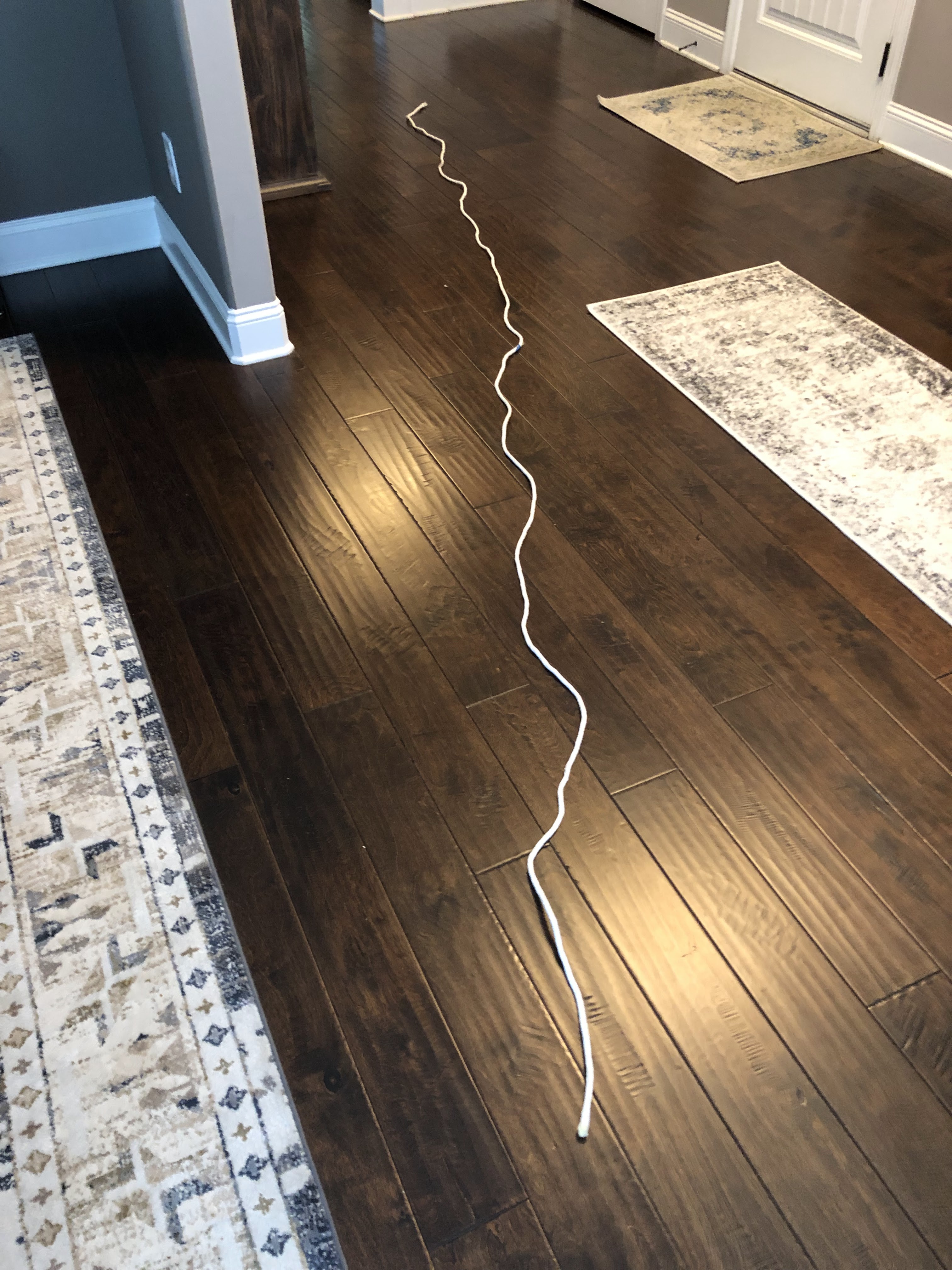
I keep the rope you see in my office at home.  The rope is exactly 168 inches long.  See the blue tape section of the rope in the next picture?

The blue tape part is only an inch long. 

Here's what it represents.  There are 168 hours in a week.  For most kids, we only have the opportunity to minister to them for one hour a week. The blue tape represents the one hour we have.  It's a great reminder that our time is limited to minister to kids when they come to church.

We must be committed to making that one hour count.    

What are you doing with that one hour?  What are you teaching?  What are you investing in?  What is your strategy for that one hour?  Do you use that one hour haphazardly or do you have a plan for helping kids know and follow Jesus?  

One day we will give account for how we used that one hour.  Will we be found good and faithful servants who served with an urgency in that one hour?  

How much effort do you put into preparing for that one hour?  Do you glance at the lesson plan at the stoplights on the way to church on Sunday morning?  Do you "wing it?" 

I hope this week we will remember just how important the limited amount of time we have with the kids is and that our commitment will be to make every hour...every minute...every second count. 

5 Big Reasons Why Kids Pick a Church to Attend

Kids are a big determining factor when it comes to picking a church to attend. 

Parents can visit a church and like it, but if their child doesn't like it, they won't be coming back.  

Studies show that people pick a church based on 2 reasons.

1. How friendly are you?

2. What do you have to offer my child?

That being said, let's talk about 5 big reasons why kids pick a church to attend. 

1. They either have a friend that already attends or they make some new friends on their first or second visit.  Kids are just like adults.  It's all about relationships.  If they don't make friends with someone, they will feel lonely and not want to return.

Here are some practical ways you can help kids make friends at your church:

Be intentional about helping guests find a friend.

Introduce guests to other children that are their age.

Do icebreakers and other relational activities that help kids connect.

Train some children to be "guests' hosts."  Their ministry is to stay with guests for the entire time and get to know them.  This is a great way for children to serve and reach others. 

2. The lessons are engaging.. If you want children to pick your church, then present engaging lessons. Learn how to capture kids' attention and get them involved in the lesson.  Here are great tips on how to do this:

How to be a Captivating Storyteller for Kids

Gen Alpha...What They Like and Connect With 

Welcome Gen Alpha

When parents come to pick up their children, 9 times out of 10 you will hear them ask this one question.

"Did you have fun today?"

What are parents asking their child by referring to the service, class, etc. as fun?  They are asking if it was relevant?  They are asking if it was engaging?  They are asking if the child learned anything?  They are asking if they want to come back?

3. There is a teacher, small group leader, volunteer, etc. that takes an interest in them and shows them kindness and care. 

As you read through these 5 reasons, you will notice that I did not include buildings or facilities. While it is great to have a cool children's ministry space, that is not the primary reason kids want to come back.  

The number one reason they will return is because they heard someone call their name.  They had someone who listened to their prayer requests and prayed for them.  They had someone who genuinely showed they cared about them and took interest in them as a person.

I love this quote by Walt Disney.  He said this right before he opened Disneyland in California.  

You can design and create, and build the most wonderful place in the world. But it takes people to make the dream a reality.

As you think about this, here are some questions to ask:

How are our ratios?  Are our current ratios able to accommodate individual attention?  

Do we have a prayer time in the lesson where kids can share prayer requests and be prayed for by name?

Are we sending follow-up postcards, letters, etc. that are handwritten and addressed to the guests by name?

4. They feel safe in your care.  Today's kids are growing up knowing they and their world can be attacked at any time.  Terrorists.  Kidnappers.  Bullies.  Bombs.  Shooters.  

And remember...being at a church is no guarantee you won't be attacked. We realize this after seeing many shootings that have taken place at a church.  Even in a small, country church like the one in Texas where 26 people were killed.  

The safety measures you have in place to protect children are so important. Kids and parents may not say anything about this up front, but it is a concern that you must address.  Share with them the measures you take to keep kids safe in your care. 

5. They didn't hear a lot of ssssshhhhhhsssss.  The leaders know that kids learn best by dialogue instead of monologue.  Kids are encouraged to get involved by talking, using their learning styles, laughing, engaging in hands on learning and lots of opporutunties to move and just be a kid instead of being forced to "sit still and be quiet."

You are surrounded by children and parents in your community that don't know Jesus.  Let's go all out to reach them with the Gospel.  To see this happen, your church must become a place where children are welcome and children's ministry is a top priority.  

God may be calling you to be the person who grasps this and helps your church live it out.

Hide & Seek

Jesus often left the crowds and went into hiding.  Here's an example. 

"Before daybreak the next morning, Jesus got up and went out to an isolated place to pray. Later Simon and the others went out to find him. When they found him, they said, 'Everyone is looking for you'.” Mark 1:35-37

Jesus sent the 12 disciples out to do ministry. When they returned, He encouraged them to separate from the people who were following them and rest.

"The apostles returned to Jesus and told him all that they had done and taught.  And he said to them, 'Come away by yourselves to a desolate place and rest a while.'  For many were coming and going, and they had no leisure even to eat. And they went away in the boat to a desolate place by themselves."   Mark 6:30-32

Early in His ministry Jesus spent the whole night alone in prayer. The next day He chose his 12 disciples.

"One of those days Jesus went out to a mountainside to pray, and spent the night praying to God.  When morning came, he called his disciples to him and chose twelve of them, whom he also designated apostles."

Here is another example of Jesus spending time alone in prayer.

"But Jesus often withdrew to lonely places and prayed."  Luke 5:16

If you want to see God move in your ministry, then you have to hide away to a secret place and seek His face.  

Look what Matthew 6:6 says about this.

"But when you pray, go away by yourself, shut the door behind you, and pray to your Father in private. Then your Father, who sees everything, will reward you."

If you want to see God move in your ministry, then you must first hide in a solitary place and seek God's face and ask for His blessings.

The Bible reminds us in Zechariah 4:6...

"Not by might nor by power, but by My Spirit," saith the Lord of hosts. 

You cannot build a fruitful ministry without the power of God.  And you can't have the power of God on your life if you are not spending time alone with Him.  

I remember when I first started in ministry.  I was just a 16-year-old-kid.  But more than anything, I wanted to be used of God to help people know Jesus and follow him. 

I was invited to speak at a special youth meeting at a church.  I was so excited.  Back then, I kept my sermon outlines in small brown binders.  As I was getting ready to leave and drive to the meeting, I grabbed the brown binder on my desk and left. 

I got to the church and after the songs,  it was my time to teach the young people who were there.  I got up, went to the podium and opened my brown binder. 

My heart dropped when I looked at the binder.  I had brought the wrong binder!  And the sermon in the binder had not to do with young people.  I began to panic.  I tried to adapt the sermon to work for the young people, but it was a disaster.  I stuttered and stammered around for a few minutes and then closed the binder.  Embarrassed to death.  

I told the people in the audience what had happened and apologized.  I told them we would go ahead and have an invitation and invite people to come forward if they want to invite Jesus into their life. 

We started the invitation and to my amazement, people started to come forward. There were tears,  There were prayers of repentance.  There were people inviting Jesus into their life.  God did a great work in many lives. 

That was Saturday night.  The next day I was scheduled to speak again in the service.  I got in my car and drove an hour one way to my house to get the correct binder.  I found the right binder and headed back to the church. 

I was confident that God was going to do an even greater work since I would have my "great' sermon now.  

I got back to the church.  It was packed with people.  I brought my "great sermon."  It was time for the invitation.  I thought lots of people would come forward to make decisions in response to my great sermon.

Guess what happened?  Nothing.  It was dead.  No one moved at all.  I wondered what had happened?  Why didn't anything happen?

On the way home, God told me why.  It's wasn't about my "great" sermon.  It was about seeking Him and hiding in His presence.  My sermons without His anointing would produce no fruit.  

It's easy to get so busy serving God that we don't make time to hide away and seek God.  But without hiding and seeking God, our ministries will fall flat.  

But when you practice the spiritual discipline of getting alone with God and spending time with Him and His Word, you will see God moving and working in great power in your ministry.

Always remember to "hide and seek."

Yesterday I Volunteered in Children's Ministry at Church...7 Things I Was Intentional About

When I am not traveling to a church or conference on weekends, I volunteer at my home church.  

Yesterday, I had the privilege of leading the elementary kids' service. 

This was the first time I led the children's ministry service at my home church (been there just a few months).  

There were 7 things I focused on.  7 things I was very intentional about doing.

1. I spent time with the kids before service started.  I talked with one boy about his video game system and what his favorite game was.  I played a game of corn hole with a kid (you can get a smaller version of the game for indoor use.)  I talked with another kid about a computer game he liked.  I talked with some other kids about their pets (dogs, cats, gerbils, etc.).  

I knew if I was going to get them to listen to me, I needed to first build a relationship with them.  When you spend time just hanging with the kids, they will open their hearts to hear what you have to say. 

One key to success in this is to have everything set up ahead of time so you can spend the time with the kids before service starts instead of running around trying to finish up your preparation. 

Here's the deal.  The kids yesterday didn't care that I have served in children's ministry for over 32 years.  They could care less that I have led several large children's ministries with thousands of kids.  

They just saw this new dude and were wandering what I was all about.  Getting kids to listen to you teach the Bible to them must start with building relationships with them.  The old saying still rings true...

"Kids don't care how much you know until they know how much you care."

It will take time for them to trust me.  But every week I am with them, I will be intentional about building relationships.  Over the course of time, they will begin to see that I care about them and will begin to listen to what I am sharing with them. 

2. I called them by their name.   Name tags are obviously a big help when it comes to calling kids by their name.  I was very intentional about every child hearing their name mentioned at least once. When you call a child by their name, it suddenly makes the room shrink and they feel like you care enough to know their name.  Friends call each other by name.  It makes the service not seem like a group experience but a personal experience. 

3. I let them be kids.  Kids love to move.  Kids love to talk among themselves.  Kids love to play games.  Kids are wired to have fun.  Rather than resisting this and telling them to sit still and be quiet, I used a lesson plan that lets kids be kids.  I was intentional about having games we played. I was intentional about giving them time to talk in their groups.  I was intentional about giving them time to move around.  

There were no ssssshhhhhhh's.  There were no "sit still and be quiet." In fact, I told them I want them to talk and move alot during the times that are designated for that. 

4. Each child was prayed for by name.  We took prayer requests in our groups.  We then prayed for every child by name.  

Large group prayers are a good thing.  But small group prayers where every child is prayed for by name is a great thing. 

5. I honored their attention span.  I used to say that the attention span of today's kids is about 5 minutes tops.  But the truth is their attention span now is just for a few seconds.  They have so much info coming at them that they have to quickly scan what they are going to give their attention to for a few minutes.  Don't try to fight against their attention span by trying to make them sit still while you are teaching.  Keep the class moving and change things up every few minutes.  Use active learning.  Do this and most of your behavioral issues will go away.

p.s. The curriculum I was using yesterday is written to honor the attention spans of today's kids. You can see the curriculum and learn more about it at this link.

6. I had them repeat the key truth of the lesson at least 10 times.  My goal was to move the key truth into their long-term memory.  Repetition is one of the key ways you can do this.  When kids hear something one time, they will remember about 10% of it.  But when a child hears something 6 times, their retention rate goes to up to 90%. 

7. I said "thank you for serving and making a difference " to every single volunteer.  I didn't say this to them as a group. Rather, I looked every volunteer in the eyes when I said this.  Did you know that 65% of volunteers say they have never heard the words "thank you?"  Don't be that leader. Be intentional about thanking volunteers every single week. 

There's nothing like getting to serve in children's ministry.  It is not a burden...it is a blessing.  It is not about serving for the income...rather it's about serving for the outcome.  It is serving in the most strategic ministry in the church (in my opinion).  

Sunday is coming back in just a few days.  Know why you are walking into that room and be intentional about reaching and teaching the precious children God is giving you the opportunity to influence for Him.